


.jpg)
Experiencing Tet Nguyen Dan (Vietnamese Lunar New Year) like a local is a once in a lifetime opportunity for travelers. Among the many traditions, making Banh Chung - the square sticky rice cake is one of the most meaningful activities. Join a local family in Vietnam to learn the art of wrapping Banh Chung and discover the heartwarming customs that make Tet so special.
1. Why Banh Chung Is a Tet Essential
Banh Chung is more than just a dish - it is a symbol of Vietnamese culture, gratitude, and family unity. Traditionally made with sticky rice, mung beans, pork, and wrapped in green dong leaves, Banh Chung is offered on the ancestral altar to honor forebears and enjoyed by families during Tet celebrations. Its square shape represents the Earth, reflecting the deep connection between humans and nature in Vietnamese beliefs.
.jpg)
2. Origin of the Banh Chung and Banh Day Tradition
The tradition of making Banh Chung and Banh Day has existed in Vietnam since the era of the Hung Kings and remains one of the enduring cultural values of the nation. Despite more than a thousand years under Chinese domination and nearly a century under Western colonial rule, the custom of preparing Banh Chung as offerings to ancestors has never faded.
According to the legend of “Banh Chung, Banh Day,” during the reign of the sixth Hung King, on the occasion of the annual ancestor worship ceremony, the king summoned his princes and announced that the prince who could create the most suitable offering for the ancestors would be granted the throne.
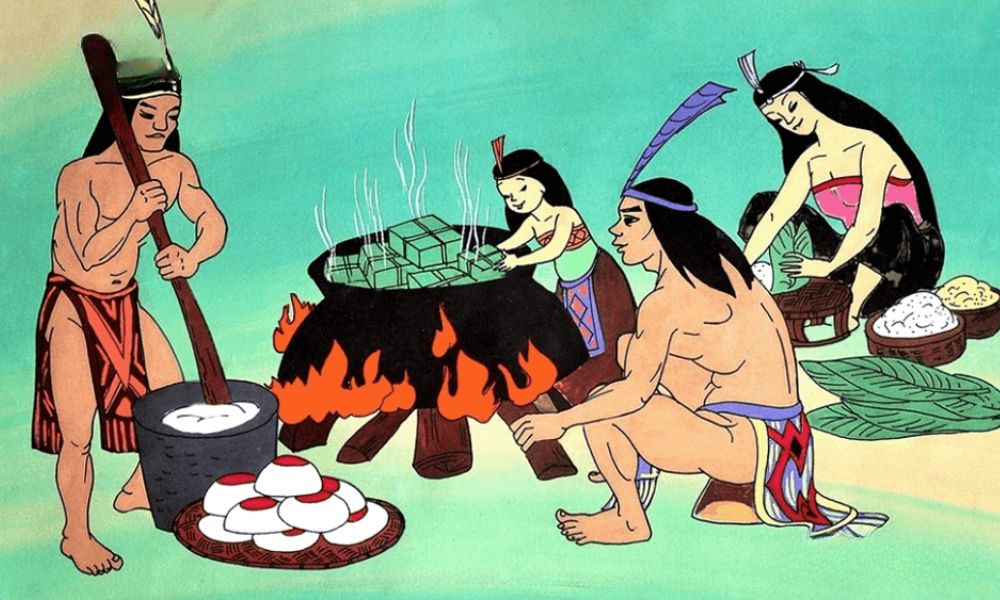
The princes searched far and wide for precious treasures and rare products to present to the king. Among them, the 18th prince, Lang Lieu, was the poorest but known for his kind, virtuous, and filial nature. Unable to find any rare gifts, he used ordinary agricultural products - sticky rice, mung beans, pork, and dong leaves to create two types of cakes, Banh Chung and Banh Day, symbolizing the Earth and the Sky, to offer to the king.
Lang Lieu’s offering pleased the Hung King greatly, and he was granted the throne. Since then, Banh Chung and Banh Day have become sacred offerings in ancestor worship rituals, symbolizing gratitude and respect for forebears. They are also indispensable dishes during Tet, the Vietnamese Lunar New Year. As a popular Vietnamese saying goes:
"Outside is the green of the dong leaves,
Inside is sticky rice, mung beans, and pork,
Wrapped with love and affection,
Soft and fragrant from the time of Lang Lieu to today."
3. The Spiritual Meaning of Making Banh Chung and Banh Day
During the final days of the year, families reunite to make Banh Chung as offerings to ancestors. Traditionally, preparations start a few days before Tet, with family members washing leaves, peeling beans, and marinating pork together. Cooking the cakes over a warm fire creates a cozy, festive atmosphere.
.jpg)
Banh Chung symbolizes the joy of family gatherings. Large square cakes are placed on the ancestral altar, while smaller ones are given to children as New Year gifts. This tradition, passed down for generations, reflects Vietnamese cultural, spiritual, and family values, uniting loved ones during Tet.
4. The Joy of Making Banh Chung with Local Families
Participating in Banh Chung-making is an immersive experience. Families gather to wash rice, prepare fillings, and wrap the cakes together, creating a warm, festive atmosphere. Travelers can enjoy hands-on learning while sharing stories, laughter, and traditional Tet songs with locals. This activity not only teaches culinary skills but also provides a unique insight into Vietnamese family life and cultural heritage.
4.1 Preparing the Ingredients
Participating in Banh Chung-making is an immersive experience that lets travelers connect with Vietnamese family traditions. The process begins with preparing the ingredients: washing glutinous rice, peeling and cooking mung beans, marinating fatty pork with seasonings, and carefully cleaning the dong leaves. This stage sets the foundation for a perfect cake and allows visitors to experience the careful attention and care involved in Vietnamese culinary traditions.
.jpg)
4.2 Wrapping the Banh Chung
Next comes the wrapping stage, where family members skillfully layer the rice, beans, and pork inside the dong leaves and tie the cakes into neat, square parcels. This part of the process is often filled with laughter, stories, and traditional Tet songs, as everyone contributes a hand. Travelers get to participate directly, learning the techniques while enjoying the joyful, communal spirit of Tet.
.jpg)
4.3 Boiling the Banh Chung
After wrapping, the cakes are boiled for several hours, often in large pots over an open fire. Travelers can watch and sometimes help tend the fire, learning the patience required to achieve the perfect texture. The aroma of cooking Banh Chung fills the air, creating a warm, festive atmosphere that embodies the spirit of Tet and family togetherness.
.jpg)
Finally, the finished cakes are set aside for the ancestral altar, while smaller cakes may be enjoyed by children and guests. This activity not only teaches culinary skills but also offers a deep insight into Vietnamese family life, cultural heritage, and the joy of Tet celebrations.
5. Other Tet Traditions to Explore While Visiting
5.1 Decorating Homes and Altars
During Tet, Vietnamese families decorate their homes and ancestral altars with kumquat trees, peach blossoms, and five-fruit trays. These decorations symbolize prosperity, health, and happiness for the new year. Travelers can join in and learn the cultural significance of each item while helping prepare the festive atmosphere.
.jpg)
5.2 Learning About Ancestor Worship and Offering Rituals
Ancestor worship is a central part of Tet celebrations. Visitors can observe or participate in the rituals, which involve offering food, lighting incense, and paying respect to past generations. This provides deep insight into Vietnamese family values and spiritual traditions.
.jpg)
5.3 Enjoying Tet Delicacies
Tet is also a time to savor traditional foods such as pickled vegetables, boiled chicken, sticky rice cakes, and various sweet treats. Travelers can taste these dishes and even learn how they are prepared, gaining a firsthand experience of Tet’s culinary culture.
.jpg)
5.4 Witnessing Local Festivities
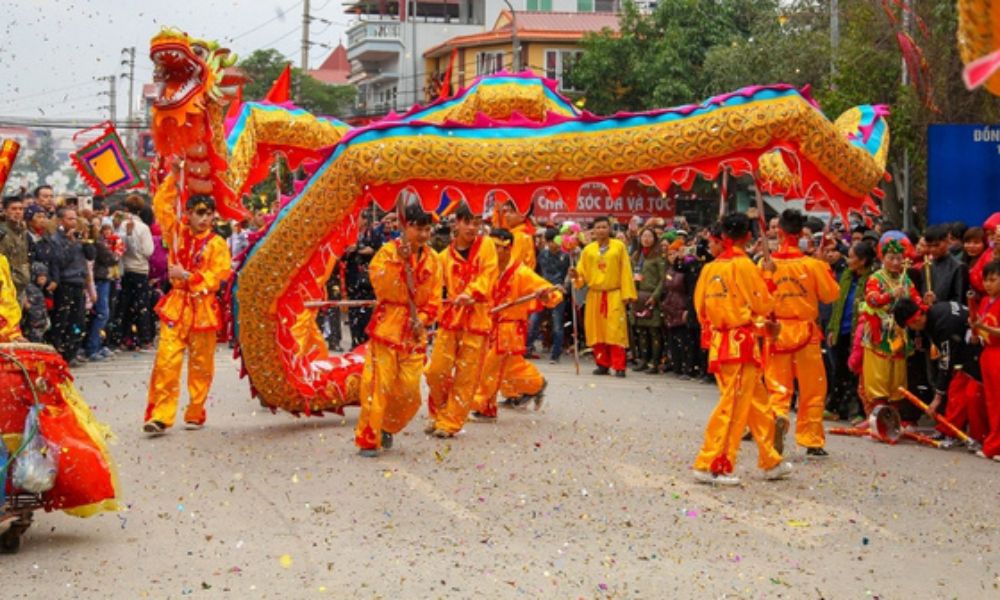
During Tet, communities host lively celebrations, including lion dances, parades, and street performances, as well as exchanging New Year greetings. Joining these events allows travelers to feel the festive energy and joy that fills Vietnamese towns and villages.
5.5 Experiencing the Spirit and Warmth of Tet
Combining all these activities - from making Banh Chung to participating in customs and festivals—offers an authentic glimpse into the spirit and warmth of Tet, making a visit to Vietnam during this time truly unforgettable.
.jpg)
Making Banh Chung with a local Vietnamese family is one of the most authentic and memorable Tet experiences. It combines food, culture, and human connection into a single festive activity. For travelers, it’s a rare chance to immerse in Vietnamese traditions, understand the meaning of Tet, and create unforgettable memories. Whether you’re a foodie, a culture enthusiast, or simply seeking a unique travel experience, joining a Banh Chung workshop is the perfect way to celebrate Tet in Vietnam.
👉 You might also like:
- Which stores and tourist attractions are open during Lunar New Year in Hanoi?
- Where to Go for New Year 2026 in Vietnam: Top Places to Celebrate & Enjoy Your Holiday
- How Vietnamese Celebrate Tet: Origins, Meanings & Traditional Customs